
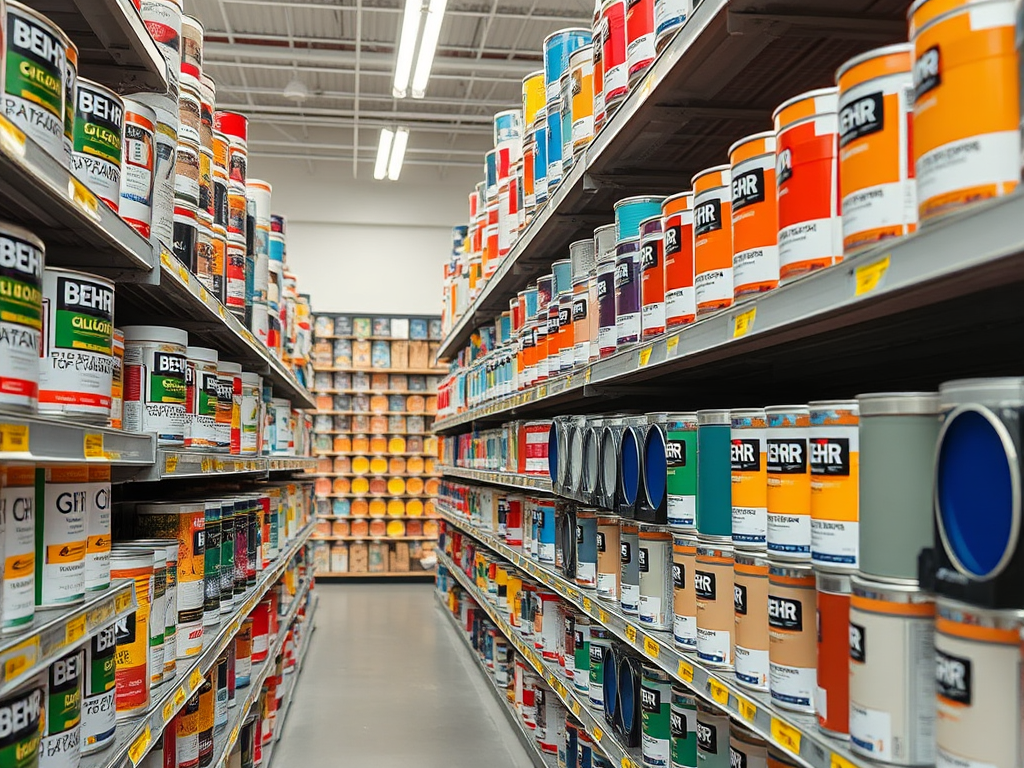

Choosing the right paint for your project can be an exciting yet overwhelming experience, especially when faced with a bunch of brands, colors, and finishes. Whether you’re a first time DIYer or a pro, the key to achieving a flawless result is understanding the different paint options and selecting the right one for your needs. In this guide, we’ll walk you through brands, finishes, and other key factors to consider before you start painting.
Paint Brands to Consider
When you step into the paint aisle, you’re likely to encounter a variety of paint brands such as Behr, Glidden, Benjamin Moore, Sherwin-Williams, and Valspar. Each of these brands has its strengths, but if you’re a beginner looking for ease and reliability, two effective brands I use are: Behr and Glidden. Let’s explore what makes them great choices for your next project.
Behr: Quality You Can Count On
Behr is one of the most recognized names in paint and a solid choice with plenty of colors and finish choices. Good to know: paint cans are recyclable and the company has a commitment to making eco-friendly products.
“Bring Energy to Any Space”
Price Range:
- $15.48 per Quart
- $30.98 per Gallon
- $135 for 5 Gallons

Glidden: Paint for Real Homes
Glidden prides itself on offering solutions that are simple and effective and at a value price point.
“For Real People, With Real Homes. You’ve Totally Got This”
Price Range:
- $11.48 per Quart
- $22.98 per Gallon
- $112 for 5 Gallons

Where to Buy: Behr products are available at Home Depot.
Color of the Year: Behr’s 2025 Color of the Year is Rumors MQ1-15, a ruby red shade designed to bring energy and vibrancy to any space.
Resources: Behr also offers comprehensive how-to guides on their website, covering everything from interior painting to wood staining, floor coating and more. Learn more on Behr’s How To website.
Where to Buy: Glidden is available at retailers like Home Depot, Walmart, and Amazon.
Color of the Year: Glidden’s 2025 Color of the Year is Purple Basil, a rich, warm shade of dark mauve that brings both energy and sophistication to any room.
Resources: Glidden’s website also provides plenty of helpful tips, tricks, and project ideas. Plus, they offer free paint swatch samples to help you choose your perfect color. See: Glidden’s Helpful Tips.
Paint and Primer in One
Both Behr and Glidden (and many other brands) offer convenient two-in-one paint and primer products, which can save you time and effort. These paints are especially helpful for smaller jobs or for covering a light base color. However, if you’re transitioning from a darker color to a lighter one, or if your walls have stains or odors (e.g., cooking smells, pet odors or mildew), it’s worth considering a dedicated primer for better results.

If you are unsure about paints and still want to look at a few more, check out the Consumer Reports ratings of nineteen paints and their effectiveness for hiding any staining: Consumer Reports.
Once you’ve chosen the perfect paint brand and color, do not forget to select the finish. Paint finishes can greatly affect the appearance and durability of your paint job, so it’s important to understand what each type offers.
Understanding Paint Finishes
When painting it is important to understand paint color; however, it is also crucial to know what “finish” you are going to choose. Many paints come in various finishes. Let’s review what each finish means so you know what type YOU want for YOUR specific project.
| Satin | Eggshell | Matte or Flat | Gloss |
|---|---|---|---|
| –Pros: durability, easy cleaning, and a subtle sheen that enhances colors, making it ideal for high-traffic areas. –Cons: can highlight imperfections and requires careful application and is also more expensive. | -Pros: subtle sheen (balancing between a matte and glossy look), durable, washable, and ideal for high-traffic areas, color enhancing without being too shiny. -Cons: may highlight wall imperfections more than flat finishes and requires careful application and usually slightly more expensive than flat paints. | –Pros: ideal for ceilings and low-traffic areas, offers a smooth, matte look that hides imperfections and adds elegance. -Cons: less durable and harder to clean, making it less suitable for high-traffic spaces and critical that it be applied carefully and uniformly. | –Pros: High shine for high-use and touch areas like trim and cabinets, extremely durable, easy to clean (great choice for family areas or rental properties). -Cons: can show imperfections, making it less ideal for walls. |


Each have their own look, if you want more information I suggest looking at Types of Paint Finishes by Home Depot for a more detailed description.
Interior vs. Exterior Paint
When choosing paint, consider its intended use: interior or exterior.
Interior paint is meant for smooth, stable environments and comes in various finishes, prioritizing aesthetics and ease of application. It’s designed for minimal wear and is easier to clean.
Exterior paint must endure harsh weather and UV exposure while resisting peeling, fading, and mildew to maintain the home’s exterior over time. Exterior paint is typically thicker and more adhesive, which means you want some experience painting before tackling an exterior painting project.
Don’t forget the brushes! When selecting paint, it’s important to choose the right brushes as well. Using the wrong ones can result in an uneven, unprofessional result and/or be inefficient. I recommend checking out All about Paint Brushes for helpful guidance.
Now, How Much Paint Do You Need?
To avoid purchasing too much or too little paint, it’s important to calculate how much you’ll need for your project. Here’s a basic guide:
- One quart of paint typically covers 90-100 square feet
- One gallon of paint typically covers 350-400 square feet
- Five gallons of paint typically covers 1,800-2,000 square feet
For a more precise estimate of how much paint you’ll need for your project, consider using a paint calculator, such as Sherwin Williams’ quick and customizable tool. Input the square footage of your space, and the calculator will provide a more accurate estimate of the paint required. However, these calculators are general guides, and your specific project may require adjustments. For instance, darker colors often require more coats to achieve full coverage and the desired effect, which can increase the amount of paint you’ll need. Conversely, many or large windows in a room means you will need less paint. Also plan to have some extra paint for touch ups. Always consider these factors when determining your paint needs. Explore Online Tools for DIYers to learn more about helpful tools for calculating the amount of paint you’ll need.
Today’s Helpful Tip about Paint Matching
Ever found yourself staring at a painted room wondering: How am I ever going to figure out what paint shade this is? Don’t worry, I’ve got a quick and easy trick that will save you some time and frustration. Forget endlessly hunting down old paint cans or notes! Simply remove the light switch plate in the room. (Most people take off the plate before painting to avoid getting any color on it anyhow.) Take a razor blade and carefully cut out a section behind the plate about the size of your thumb. Then, head over to your local paint store (my go-to is Home Depot) where they can (usually) recreate the shade. If you only need to do a touch up, consider this tool, once you have a small can of matching paint or leftover paint: Touch Up Paint Pen 6 Paint Touch Up Pens Fillable Brushes.




Leave a Reply